
 By
Markets are pricing in a near-certain probability of the Federal Reserve raising interest rates for the second time in three months at its December meeting.
CME FedWatch data on Thursday showed a 99.4% probability of a rate hike in December, which would take the federal funds rate to the 4%-4.25% range. The implied probability was around 97% a day earlier.
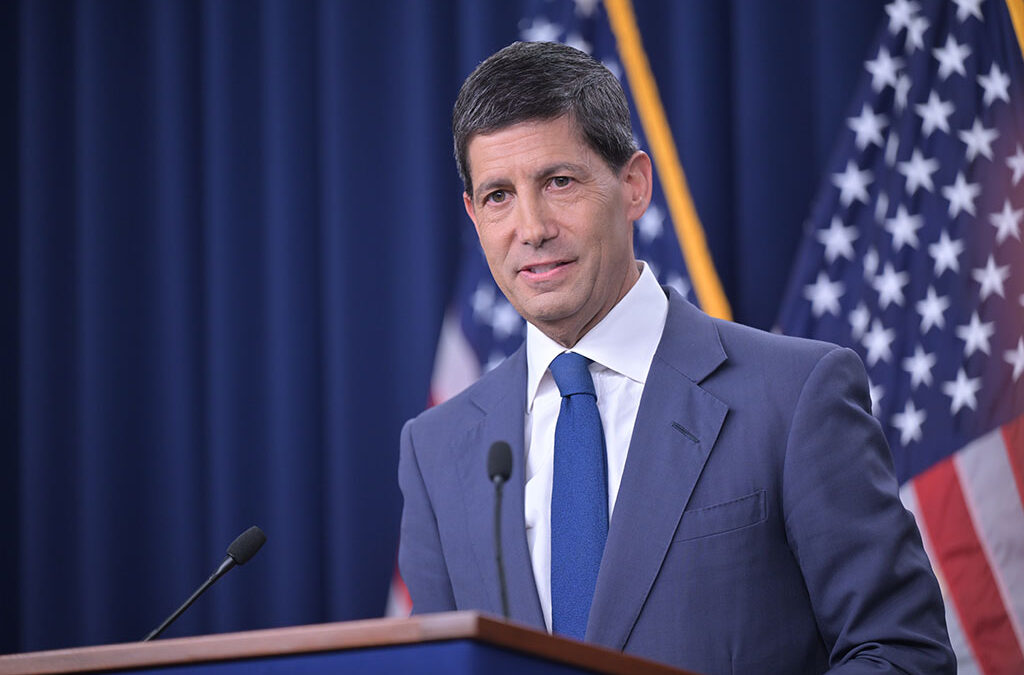
Wednesday’s inflation data appears to have essentially confirmed the expectations of another increase after the Kevin Warsh-led committee raised rates in September for the first time in three years.
The latest figures have also raised questions about how much further borrowing costs may need to rise in 2027.
However, the prospect of additional tightening comes at a difficult time for financial markets.
A sharp selloff in artificial intelligence stocks has rattled Wall Street, with the Nasdaq 100 briefly entering bear-market territory on Wednesday, November 25, before recovering from its session lows.
This has raised a difficult question for policymakers: could the deterioration in financial markets force the Fed to reconsider its tightening plans?
Inflation data strengthen case for a hike
The US personal consumption expenditures (PCE) price index, the Federal Reserve’s preferred inflation gauge, rose 3.8% year over year in October, according to data released by the Commerce Department on Wednesday.
Core PCE inflation, which excludes volatile food and energy prices, increased to 3.3%, exceeding economists’ expectations by 0.1 percentage point.
Both measures remain considerably above the Fed’s 2% inflation target, suggesting that price pressures have yet to return to levels policymakers consider acceptable.
The latest figures followed October’s consumer price index report, which showed headline inflation rising 0.4% on a monthly basis, compared with expectations of 0.3%. Core CPI increased 0.3%, matching the previous two months but exceeding the 0.2% forecast.
Meanwhile, the US economy expanded at an annualised rate of 4.3% in the third quarter, according to the revised Commerce Department estimate.
That was 0.9 percentage point higher than the initial estimate, reflecting stronger investment and consumer spending.
The combination of persistent inflation and resilient economic growth gives policymakers little immediate reason to abandon their tightening approach.
Williams reinforces Fed’s inflation priority
New York Fed President John Williams has also stressed that bringing inflation back to the central bank’s target remains essential.
Speaking at the University of Mount Saint Vincent in New York on November 23, Williams said inflation remained too high and that policymakers still had work to do.
“But getting inflation back to 2% is 100% essential,” he said.
He also acknowledged that monetary policy cannot resolve supply-side disruptions directly, including problems affecting shipping routes, pipelines and refineries.
However, he argued that the Fed must prevent such shocks from creating persistent inflationary pressures or weakening inflation expectations.
Other Fed policymakers have also maintained similar views, suggesting that they are unlikely to tolerate elevated inflation simply because financial markets are struggling.
Can AI selloff force Fed to reconsider?
The growing turmoil in technology stocks has nevertheless introduced another consideration into the rate debate.
The Nasdaq 100 briefly fell 20% below its October peak on Wednesday, meeting the definition of a bear market before recovering from its lows.
Investors have been reducing exposure to AI-linked companies amid concerns about enormous infrastructure spending, expensive financing and uncertainty over whether the investments will generate sufficient returns.
The Nvidia-Jensen Huang scandal regarding a suspected Chinese spy has also worried investors as the chipmaker and its star CEO remain central to the AI trade.
Torsten Slok, chief economist at Apollo Global Management, believes the market turmoil provides a strong argument for caution.
“If they look at inflation, they should be hiking. But if you look at the outlook for AI, they should maybe be cutting,” Slok told the Financial Times.
He described the recent market turmoil as a very strong argument against aggressive rate increases.
Claudia Sahm, chief economist at New Century Advisors, was less convinced that the selloff would change the Fed’s immediate direction.
“At this point, it’s going to be hard to get them off this focus on inflation,” she said to the Financial Times, adding that stock declines would need to become considerably larger to influence policymakers.
A decline in equity prices can tighten financial conditions by making it more expensive for companies to raise capital and reducing household wealth.
Bill Ackman warns against another rate hike
Pershing Square founder Bill Ackman has been among the most vocal critics of the Fed’s tightening approach.
In a post on X, Ackman argued that financial conditions had already tightened substantially, pointing to rising borrowing costs and the recent decline in stock prices.
He also questioned the central bank’s 2% inflation target, arguing that geopolitical risks, tariffs, military expenditure and massive investments in AI infrastructure and energy have fundamentally changed the economic environment.
Ackman believes a 3% inflation target would be more realistic under current circumstances.
“The Fed will put the U.S. and world in recession if it continues to raise rates in a failed attempt to drive inflation to 2%,” he warned.
For now, however, markets are overwhelmingly positioned for another increase.
The December 8-9 meeting will test whether policymakers remain focused on persistent inflation or become concerned about the economic consequences of tighter financial conditions.
AI disclosure: AI tools assisted with research and drafting of this piece. An Invezz editor reviewed the facts, sources and wording before publication. Any opinions or analysis are Invezz’s, not those of an automated system.
The post Fed rate hike odds rise to almost 100%: can AI selloff force a rethink? appeared first on Invezz
